
Holopsonie or how to improve the regulation of emotions and cognitive functions
Holopsonie is a non-invasive audio-musical training method that transforms music into personalized “musical puzzles” to support stress management, emotional balance, and mental clarity
A gentle solution
…for modern well-being challenges
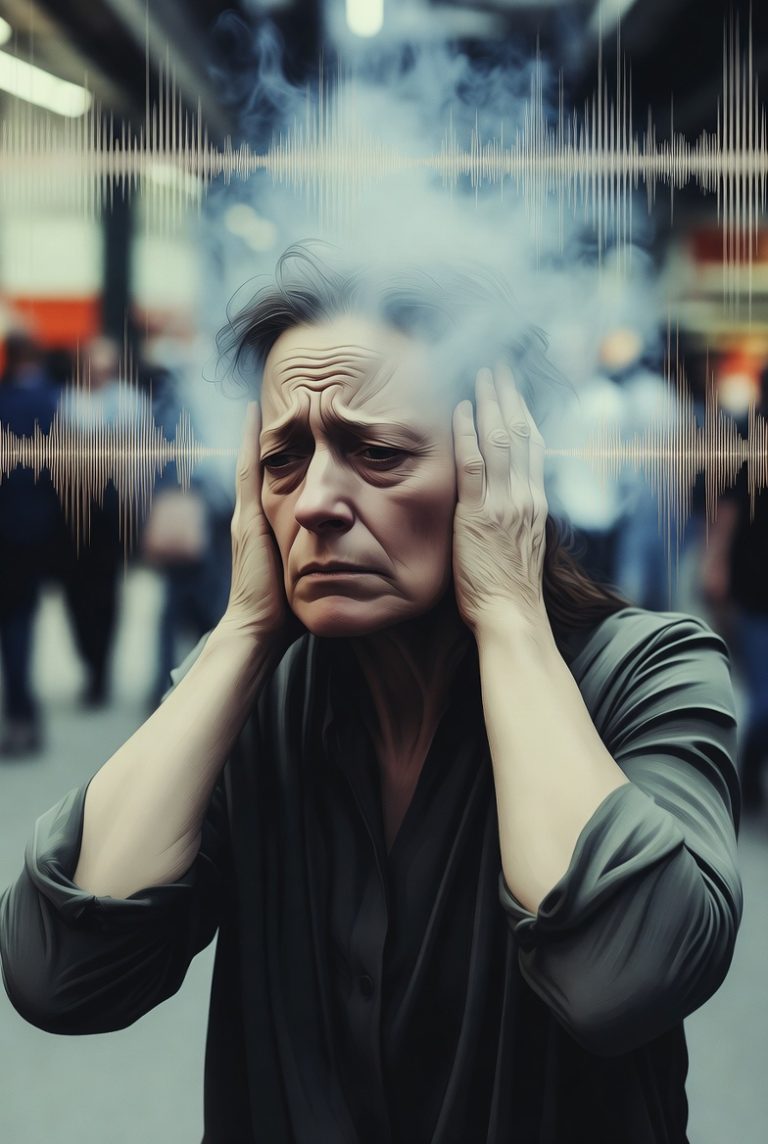
Many people today experience persistent stress, anxiety, burnout, difficulty concentrating, sleep disturbances, emotional ups and downs, or challenges with learning and focus.
Others feel emotionally blocked, overly sensitive to sounds, or struggle with attention and mental clarity in their daily life.
Holopsonie is a method of audio-cerebral stimulation whose primary objective is relaxation. Beneficial side effects in all areas of health are supported by a strong scientific foundation (see below) and decades of practice.
Many users and practitioners report significant improvements in relaxation, emotional balance, concentration and overall well-being as positive side effects of personalized listening sessions.
Holopsonie is not a medical treatment and does not claim to cure or treat any condition, it offers a natural and non-invasive audio-musical training approach.
Are you wondering if this could support your well-being?
→ Listen to our training demonstration track (with headphones or headsets).
What is Holopsonie?
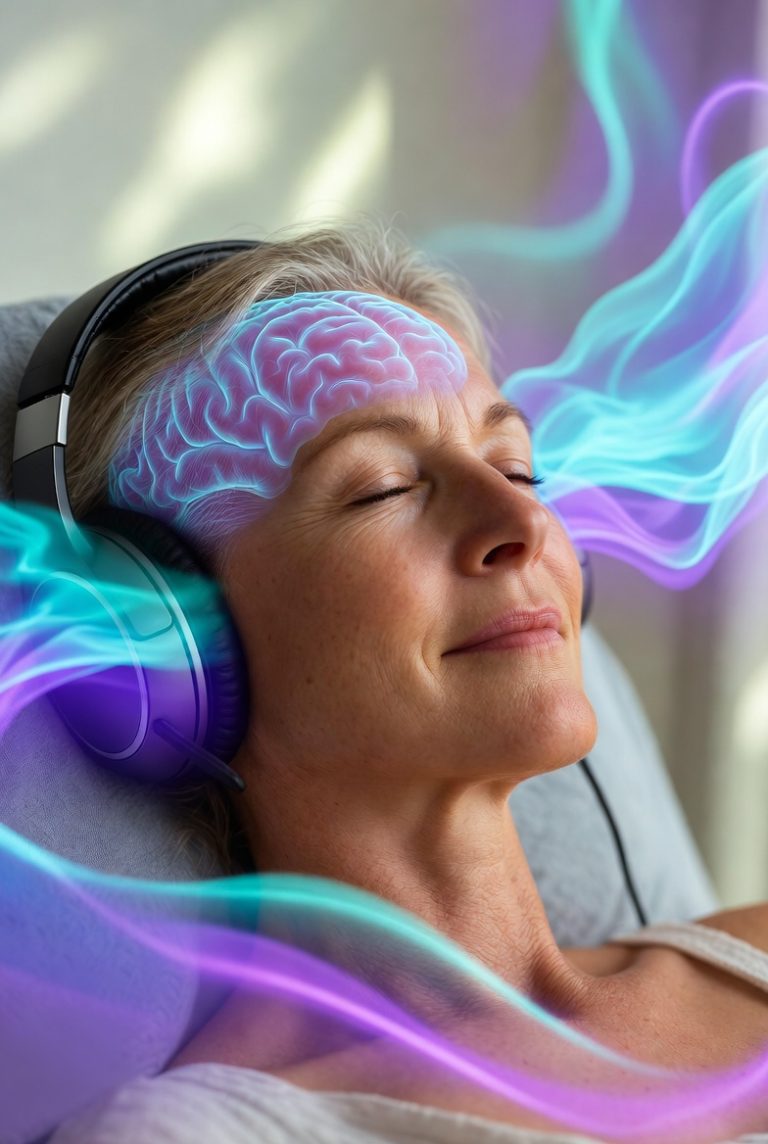
Holopsonie is a well-being method based on audio-cerebral stimulation through personalized musical listening. The name comes from the Greek words *holos* (whole), *ps* (psychological), and *sonie* (sounds). It is designed as a tool for self-knowledge and global equilibrium.
At its core, Holopsonie turns ordinary music into what we call custom musical puzzles. During each session, the music is specially modified so that each ear receives a different part of the piece, often alternating between treble and bass frequencies, with precise filters applied according to the individual’s listening profile.
This creates a dynamic and engaging listening experience that gently challenges the brain to reorganize and harmonize its auditory processing. The primary goal is to support deep relaxation through targeted audio-cerebral stimulation.
Holopsonie was developed in 1987 and has been refined over more than 35 years of practice. It builds upon earlier auditory training concepts while offering greater precision thanks to modern digital technology.
Who is Holopsonie for?
Holopsonie is suitable for adults and children seeking natural support for stress management, emotional balance, concentration, and overall well-being. It is also used by health and well-being professionals as a complementary tool in their practice.
Origin and evolution of the method
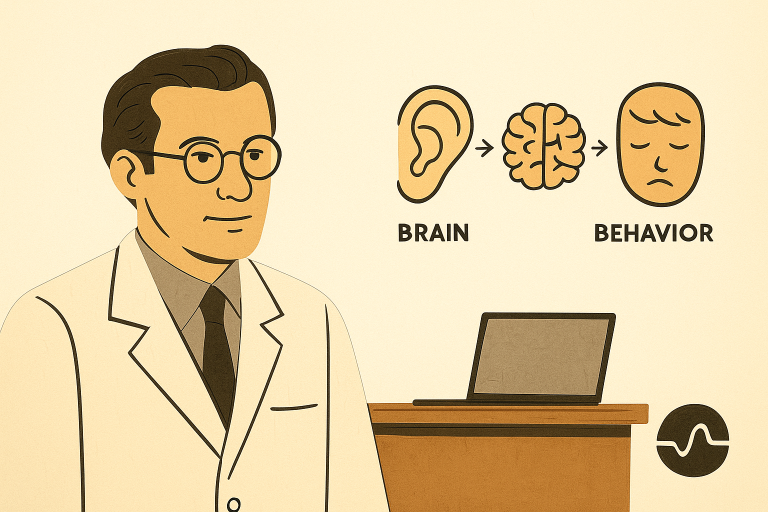
Holopsonie draws inspiration from pioneering work in auditory training developed since the 1960s, particularly the contributions of Dr. Alfred Tomatis and his student Dr. Guy Bérard. These early approaches highlighted the important connection between hearing, brain function, and overall balance.
In 1987, sound engineer Jean Bouchet collaborated with Dominique Bourdin to create Holopsonie. The method evolved to offer several key improvements: simultaneous management of hyper- and hypo-sensitivities, a higher number of frequencies processed per ear, fully individualized per-ear customization, and the use of high-quality digital filters.
The principles behind the method
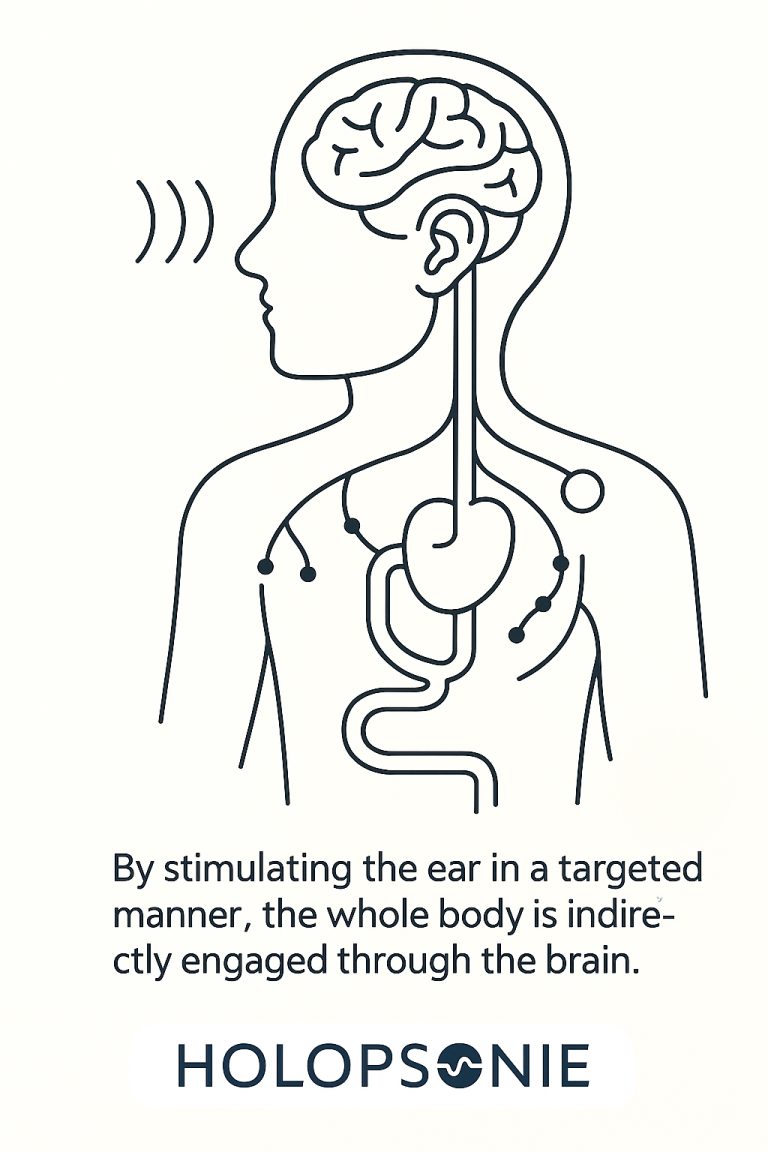
Musical listening simultaneously activates many brain systems — sensory, emotional, cognitive, and memory circuits. Holopsonie works with this natural interconnection by providing gentle, personalized auditory stimulation.
By training the auditory system in a precise and individualized way, the method supports the nervous system’s capacity for self-regulation. Over decades of observation, practitioners have noted that improvements in listening sensitivity often go hand in hand with greater emotional balance and mental clarity.
Des protocoles d'entrainement flexibles
Holopsonie offers adaptable protocols:
- Intensive training: 2 sessions of 45 minutes per day for 3–5 days
- Modern busy-life Training: 1 session of 30 minutes per day for 10–20 days
- Longer-term support: Alternating phases over several weeks or months
Choose the format that fits your life:
High Definition music listening
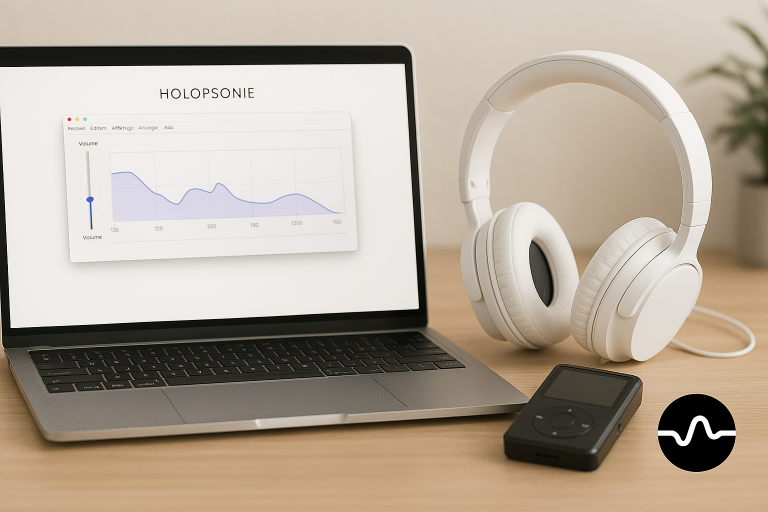
Our high-definition algorithm is designed to be applied to any high-definition music base to generate brain audio training puzzles. We do not use the principles of psycho-acoustics that seek to compress music with frequency loss: on the contrary, we seek to stimulate over a wide frequency spectrum.
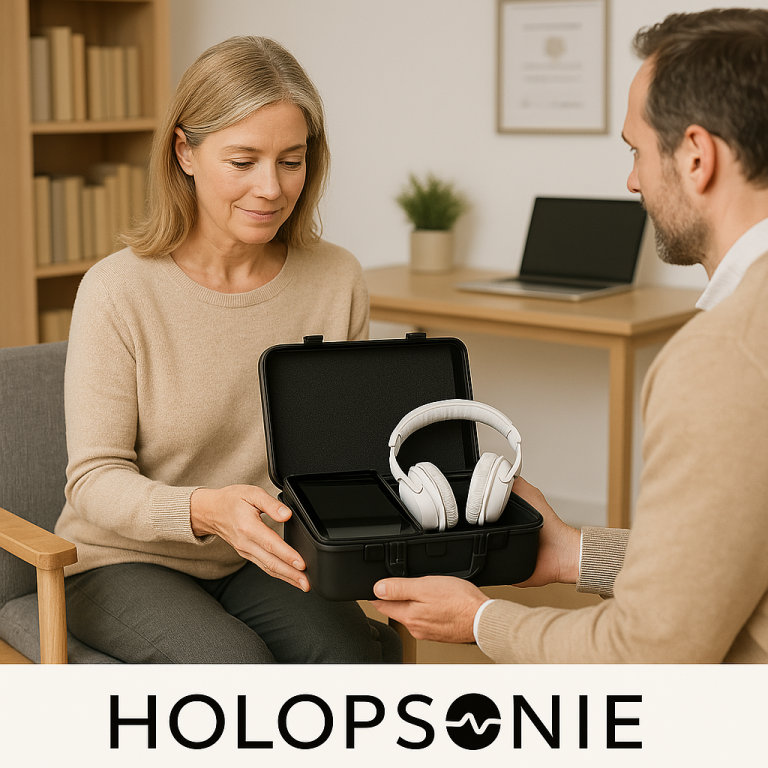
The technological progress of devices used to listen to music now makes good quality listening very accessible. Brain audio training can therefore be done with quality headphones, and we encourage the use of professional quality equipment to optimize stimulation (passive isolation headphones, HD audio player, sound card…).
→ Get the starter pack Audio brain trainer.
→ Chat with us on WhatsApp for personalized support or to start your trial as a practitioner.
How the custom musical puzzles work?
The effectiveness of Holopsonie comes from the creation of personalized musical puzzles. Here is how the method works in practice:
Listening test (5 to 10 minutes)
A simple test measures how each ear perceives different frequencies and identifies areas of hyper-sensitivity or hypo-sensitivity.
Music modification into a musical puzzle
You choose music you enjoy. Our technology applies specific digital filters so each ear receives a different sonic experience. The music becomes a true “puzzle” that the brain processes in real time.
Regular listening sessions
You listen to your customized sessions in a relaxed state. Sessions last 30 to 45 minutes and can be done while sitting quietly, drawing, or resting. The training is compatible with daily life.
A mid-program listening test often allows the musical puzzles to be updated as sensitivity evolves.
Ready to experience it ?
Observed benefits and clinical insights
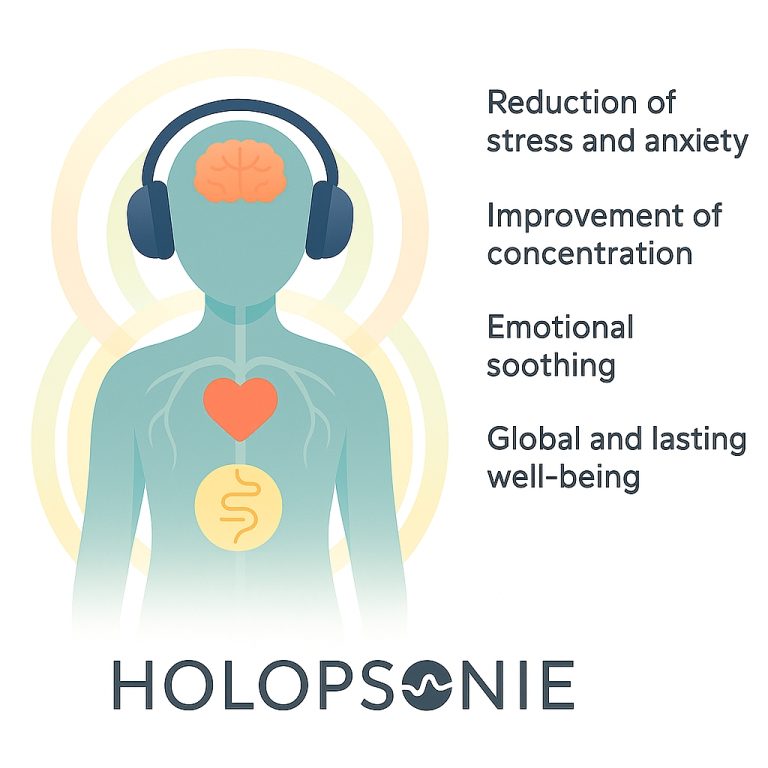
While the primary objective of Holopsonie is deep relaxation through audio-cerebral stimulation, many users report additional positive effects. These are considered potential secondary benefits observed over 35 years of practice.
Commonly reported improvements include:
- Reduced stress, anxiety, and burnout symptoms
- Better emotional regulation and inner calm
- Improved concentration, memory, and mental clarity
- Better sleep quality
- Greater sense of recentering and emotional liberation
- Support for learning, attention, and auditory comfort
Practitioners have shared numerous observations over the years. One notable case involved a 6-year-old girl facing relational and auditory challenges who showed clear improvements in auditory harmonization and family relationships after 18 personalized sessions.
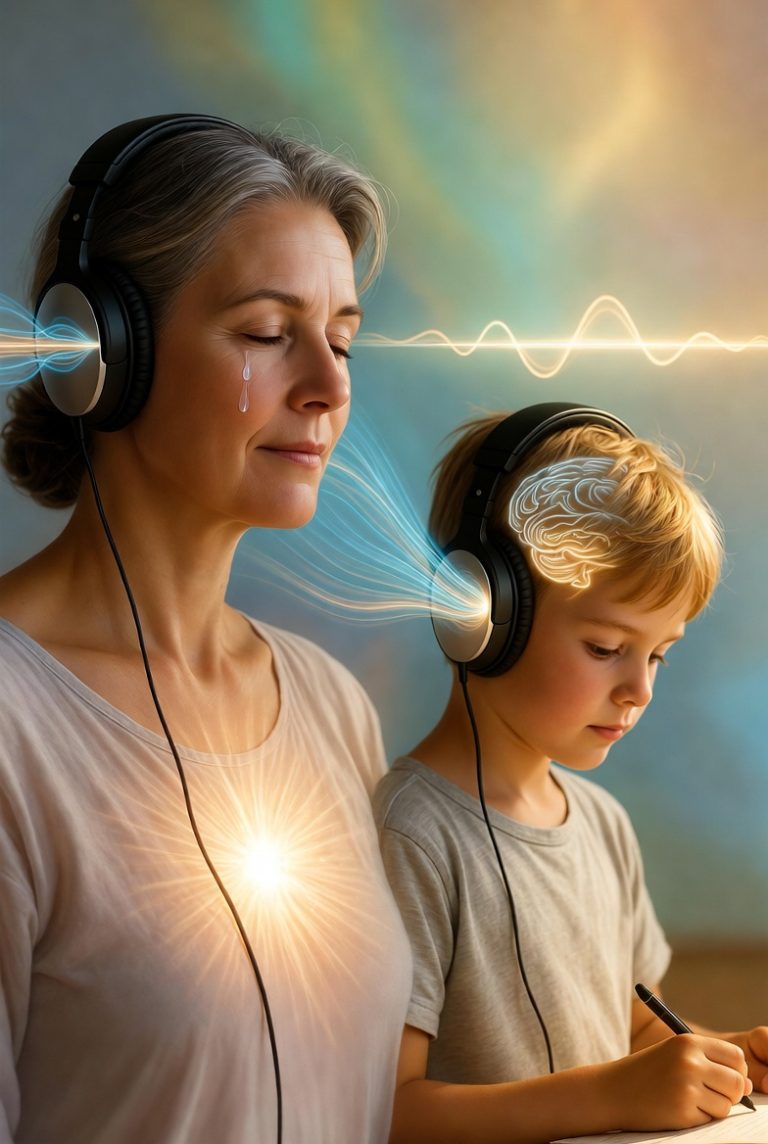
Other documented experiences include rapid emotional shifts, improved focus in children, and greater auditory comfort in adults.
While rare, some individuals have experienced strong emotional releases during the process, which is why professional accompaniment is recommended, especially for those with significant psycho-emotional challenges.
These are individual observations. Results vary and Holopsonie works by supporting the body’s natural regulatory processes.
These effects are documented through clinical observations and user feedback. They are not guaranteed and vary from person to person.
Audio Brain trainings put to the test by Science
Several studies on Holopsonie and its precursor methods (Tomatis and Bérard AIT) have explored these areas. A mémoire on 23 children with learning difficulties showed improvements in sustained attention, cognitive flexibility, and auditory/visual attention after a short Holopsonie program (measured with TEA-CH and NEPSY II tests):
https://lucilebourdinpsychologue.fr/wp-content/uploads/2024/10/memoire-holopsonie.pdf (FR)
A study on 25 children with ADHD using the Tomatis method (precursor) reported positive effects on processing speed (WISC-IV), phonological processing, and brain activity, with parents noting reduced attention problems:
https://aura.antioch.edu/cgi/viewcontent.cgi?article=1044&context=etds
Research on 1,330 children found improvements in learning abilities (+5%) and social skills (+6%) with Tomatis training:
https://issuu.com/tomatisdoc/docs/fr_attention_and_tomatis_method_for
A meta-analysis of 231 children with learning difficulties showed significant results in linguistic skills, psychomotor abilities, social-emotional maturity, and auditory perception:
https://www.tandfonline.com/doi/epdf/10.1080/10904018.1999.10499024?needAccess=true
Studies on sensory and behavioral profiles in children, including those with autism spectrum characteristics, have also shown positive trends with auditory training methods:
https://berardaitwebsite.com/wp-content/uploads/2019/06/Berard-AIT-Behavior-Sensory-Changes-2-2014-1.pdf et https://pubmed.ncbi.nlm.nih.gov/27573986/
Regarding auditory sensitivity, one study on 41 children found a 53.7% improvement in auditory discrimination after Tomatis training:
https://tomatis-la-chaux-de-fonds.ch/wp-content/uploads/2023/02/traitement-_auditif.pdf
An internal analysis of 266 Holopsonie listening tests showed that 53% of participants improved their auditory sensitivity by an average of 3.8 dB after only 5–6 hours of listening (representing a significant increase, due to the logarithmic nature of the sound measurement scale and taking into account that sensitivity increases most noticeably at the extreme ends of hypersensitivity and hyposensitivity.)
The full clinical observations and abstract presented at the ICNM 2026 World Congress are also available: download summary (PDF).
Would you like more details on these observations?
Testimonials
They tried Holopsonie
and they are delighted by it

From the very first week, my mother felt calmer, slept better, and her mood improved.
Laurence, osteopath

An essential tool to facilitate calm and often real psycho-emotional breakthroughs.
François-Xavier, clinical psychologist with a doctorate in psychology

Clients almost always show increased auditory sensitivity after 3 days, and most report restored harmony after 5 days.”
Pascal, practitioner
Ready to begin your journey?
*Holopsonie is a wellness method focused on relaxation through personalized auditory training. It is not a medical device and is not intended to diagnose, treat, cure or prevent any disease. The observed benefits are potential side effects reported by users and practitioners.